
Pest Control Services in Salmiya: Local Solutions for a Coastal Challenge
Salmiya is one of Kuwait’s most vibrant, most densely populated, and most diverse neighborhoods. Its waterfront corniche, sprawling shopping centers, endless restaurant strips, and dense blocks of residential towers make it a place where people genuinely want to live and work.
It is also — for reasons that have everything to do with geography and building stock — one of Kuwait’s most pest-pressured areas.
If you live or operate a business in Salmiya, you have likely noticed: pests here are different. They are more persistent. They show up in buildings that seem well-maintained. They resist the treatments that worked elsewhere. This is not your imagination, and it is not a failure of your cleaning standards.
Salmiya’s coastal location, older building infrastructure, restaurant density, and high-rise living create a specific pest ecology that requires a specific response. Generic pest control — the kind calibrated for inland, newer, lower-density areas — consistently underperforms here.
This guide explains what makes Salmiya different, which pests dominate the area, why standard approaches struggle, and how Guardix’s local Salmiya programs are built for these exact conditions.

Why Salmiya Has Unique Pest Pressure
The Coastal Humidity Factor
Salmiya’s position on Kuwait Bay fundamentally changes the pest equation:
- Elevated humidity: Coastal humidity is measurably higher than inland areas like Jahra or Farwaniya. Many pests — cockroaches, termites, silverfish, and dust mites — thrive in moisture-rich environments.
- Condensation problems: The combination of humid outside air and aggressive indoor air conditioning creates persistent condensation on windows, around AC units, and inside wall cavities
- Mold and moisture pests: Damp conditions support mold growth, which in turn attracts moisture-loving pests and creates secondary health concerns
- Corrosion and structural wear: Salt-laden coastal air accelerates the deterioration of building seals, window frames, and utility penetrations — creating more entry points over time
What this means: Salmiya properties need moisture management as a core pest control strategy, not an afterthought. Eliminating condensation and fixing humidity issues does more to reduce pest pressure here than in most Kuwait neighborhoods.
Building Age and Density
Much of Salmiya’s residential and commercial building stock dates from earlier development waves:
- Aging infrastructure: Older plumbing, drainage, and sealing systems provide more pest entry and harborage opportunities
- Shared building systems: High-rise towers share risers, drainage stacks, and garbage chutes that allow pests to migrate between units
- High unit density: A single building may house hundreds of families, meaning pest pressure is cumulative — and a problem in one unit affects neighbors
- Renovation churn: Continuous apartment renovations and tenant turnover disturb pest populations, scattering them into adjacent units
What this means: Salmiya pest control requires a building-wide perspective. Treating individual units in isolation rarely produces lasting results in high-density towers.
Restaurant and Retail Density
Salmiya’s commercial character is a major pest pressure driver:
- Restaurant concentration: Salem Al Mubarak Street and surrounding areas host an extraordinary density of restaurants, cafés, and food outlets
- Food waste volume: High concentrations of food service generate substantial organic waste, supporting large cockroach and rodent populations
- Delivery traffic: Constant food delivery activity moves pests (and their egg cases) between commercial and residential areas
- Shared waste infrastructure: Communal bin areas and garbage chutes in mixed-use buildings sustain pest populations year-round
What this means: Properties near commercial strips face elevated baseline pest pressure and benefit from preventive programs rather than reactive treatment.
High-Rise Living Challenges
Salmiya is one of Kuwait’s most vertical neighborhoods, and high-rise living has specific pest implications:
- Vertical migration: Cockroaches, rodents, and even bed bugs move between floors through utility risers, pipe chases, and elevator shafts
- Upper-floor invasions: Roof rats use balconies, utility lines, and facade features to reach upper floors
- Balcony ecosystems: Balconies with plants, storage, and AC units create micro-habitats that harbor pests
- Shared AC infrastructure: Central or shared AC systems can distribute contaminants and pests between units

The Most Common Pests in Salmiya
German Cockroaches
The dominant pest complaint across Salmiya, particularly in:
- Older apartment towers with aging kitchen infrastructure
- Ground-floor and lower-floor units near drainage and waste areas
- Restaurant-adjacent buildings where food waste supports large populations
- Units with AC condensation issues providing reliable water sources
German cockroaches in Salmiya often show resistance to common over-the-counter insecticides due to decades of treatment pressure. Professional-grade baits with rotating chemistries are typically required.
American Cockroaches (Sewer Cockroaches)
Salmiya’s older drainage infrastructure makes sewer cockroaches a frequent problem:
- They emerge from floor drains, particularly in bathrooms and kitchens
- Ground-floor units and buildings with older plumbing are most affected
- Population pressure increases during hot, dry periods when they seek water indoors
- Drain management and treatment is the primary control strategy
Bed Bugs
Bed bug incidence in Salmiya reflects its density, turnover, and travel connections:
- High tenant turnover in rental buildings increases introduction risk
- Used furniture traffic through Salmiya’s active resale market spreads infestations
- International connectivity — a diverse, mobile population means frequent travel-related introductions
- Multi-unit spread — bed bugs migrate between apartments through wall voids and utility penetrations
Bed bug treatment in Salmiya towers requires coordinated, multi-unit approaches and follow-up protocols.
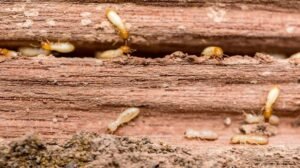
Termites
Moisture plus older wooden infrastructure makes termites a real concern:
- Subterranean termites thrive in moist soil near foundations and irrigated landscaping
- Coastal humidity supports colony activity year-round
- Older buildings may have wooden elements (door frames, cabinetry, structural timber) vulnerable to attack
- Swarm sightings are most common during warmer, humid periods
Rodents
Salmiya’s restaurant density and older building stock create consistent rodent pressure:
- Norway rats in ground-floor and basement areas, entering via damaged drains
- Roof rats in upper floors, using balconies and utility lines
- House mice in older buildings with abundant harborage
- Strong pressure on restaurants, groceries, and ground-floor retail
Ants and Secondary Pests
- Ants invade kitchens seeking water, particularly during dry, hot periods
- Silverfish and drain flies thrive in Salmiya’s humid bathrooms and kitchens
- Mosquitoes concentrate around irrigated landscaping and any standing water on balconies

Why Generic Pest Control Struggles in Salmiya
Standard pest control approaches — designed for typical suburban or newer inland properties — fail in Salmiya for predictable reasons:
| Generic Approach | Why It Fails in Salmiya |
| Unit-only treatment | Pests migrate between units through shared infrastructure; treating one apartment in a tower rarely resolves the building-level population |
| Single-visit treatment | Accelerated breeding and continuous reintroduction from neighboring units require follow-up protocols |
| Standard chemical rotation | Salmiya’s cockroach populations have significant resistance to commonly used products |
| Spray-only methods | Repellent sprays scatter cockroaches deeper into wall voids and neighboring units — the “scatter effect” |
| Ignoring moisture | Without addressing Salmiya’s humidity and condensation, the conditions attracting pests remain |
| No drain management | Sewer cockroaches require drain-specific treatment that general spraying does not provide |
The core issue: Salmiya pest problems are frequently building-ecology problems, not individual-unit problems. Effective treatment must operate at the building scale and address the environmental factors — moisture, waste, shared infrastructure — that sustain pest populations.
The Guardix Salmiya Program
Guardix has served Salmiya’s homes and businesses for over a decade. Our local programs are built specifically for coastal, high-density, mixed-use conditions.
Phase 1: Property-Specific Assessment
- Building survey: Assessment of shared infrastructure — risers, drainage, garbage chutes, utility penetrations
- Unit inspection: Identification of active pests, harborages, entry points, and moisture sources
- Pressure mapping: Understanding where pest populations originate (drains, neighboring units, waste areas, exterior)
- Moisture audit: Identification of condensation, leaks, and humidity issues that drive coastal pest attraction
Phase 2: Targeted Treatment
- Cockroach control: Professional gel baits with rotating active ingredients to overcome local resistance; insect growth regulators to break breeding cycles; drain treatment for sewer cockroaches
- Bed bug protocols: Multi-visit treatment with follow-up timed to egg hatch cycles; coordinated unit treatment where building-wide spread is detected
- Rodent management: Tamper-resistant stations, exclusion of entry points, and drain guards where sewer entry is confirmed
- Termite treatment: Soil treatment, baiting systems, and moisture management appropriate to coastal conditions
- Perimeter defense: Exterior barrier treatment to reduce pressure from surrounding commercial and waste areas
Phase 3: Moisture and Environmental Management
Because Salmiya’s humidity is a root cause rather than a contributing factor, this phase is non-negotiable:
- Condensation control guidance: AC maintenance, pipe insulation, ventilation improvements
- Leak identification: Coordination with building maintenance for plumbing and envelope repairs
- AC cleaning: Duct and unit cleaning to remove accumulated dust and biological growth that thrive in humid conditions
- Drain management: Treatment and maintenance protocols for floor and sink drains
Phase 4: Monitoring and Building Coordination
- Follow-up scheduling: Timed to species breeding cycles, with closer intervals during peak seasons
- Monitoring stations: Detection devices to identify renewed pressure early
- Building management coordination: For tower properties, we can work with building management on shared-area treatment and resident communication
- Documentation: Service records for tenants, landlords, and (for businesses) Ministry of Health compliance
Salmiya-Specific Service Considerations
For Apartment Residents
- Coordinate with neighbors: In towers, simultaneous or coordinated treatment of adjacent units dramatically improves outcomes — we can provide guidance or work with building management on this
- Report to building management: Drainage, waste chute, and shared-area issues are building-level responsibilities; document pest issues formally
- Focus on moisture: Fix AC condensation and bathroom ventilation issues first — this addresses the root attractant
- Balcony hygiene: Remove stored clutter and standing water from balconies; these are common harborage sites
For Landlords and Property Managers
- Preventive programs between tenancies: Treating vacant units before new tenants arrive prevents population establishment and protects your property reputation
- Shared-area treatment: Regular service for garbage rooms, drainage, parking, and utility areas reduces building-wide pressure
- Resident communication: Clear guidance reduces DIY treatments that scatter pests to neighboring units
- Portfolio pricing: Multiple-unit owners receive priority scheduling and volume rates
For Salmiya Businesses
- Restaurant compliance: Ministry of Health documentation, integrated pest management, and appropriate service frequency for food service
- Retail and salon: Discreet service scheduled outside business hours
- Office towers: After-hours cleaning and treatment coordination with building management
- Hotel and furnished apartments: Bed bug protocols, guest-room monitoring, and rapid response procedures


Service Coverage and Response
Guardix serves all Salmiya areas, including:
- Salem Al Mubarak Street and surrounding commercial strips
- Salmiya residential towers and apartment blocks
- The waterfront and corniche area
- Mixed-use and commercial buildings throughout the district
- Adjacent areas — Salwa, Bnaid Al-Qar, and Rumaithiya
Response commitment: We prioritize Salmiya service calls with same-day or next-day response for active service clients, and emergency response for commercial pest emergencies such as restaurant pest sightings or severe infestations.
Frequently Asked Questions
I keep getting cockroaches even after treatment. Why?
In Salmiya towers, re-infestation usually comes from three sources: neighboring units via shared infrastructure, drains (for sewer cockroaches), or moisture that keeps attracting new populations. Resolving Salmiya cockroach problems typically requires building-scale coordination, drain treatment, and moisture management alongside unit treatment.
Are your treatments safe for my family in a high-rise apartment?
Yes. Guardix uses Ministry of Health-approved products applied with targeted methods — gel baits in cracks and crevices, baits in tamper-resistant stations — rather than broad spraying. Your technician will advise on any brief re-entry considerations.
My neighbor has bed bugs but I do not see any. Should I treat?
We recommend a preventive inspection immediately. In Salmiya’s connected towers, bed bugs migrate between units. Early preventive treatment is far less disruptive and costly than treating an established infestation.
How often should Salmiya properties be serviced?
For most Salmiya apartments, quarterly preventive service is appropriate. Restaurant-adjacent properties, ground-floor units, and buildings with known pest pressure often benefit from monthly or bi-monthly service. We assess your specific situation and recommend the right interval.
Do you work with building management for tower-wide treatment?
Yes. For towers and multi-unit buildings, we can coordinate with building management on shared-area treatment, resident notification, and building-wide programs — which produces substantially better outcomes than isolated unit treatments.
Local Expertise Matters
Pest control is not a generic commodity. The conditions that make Salmiya a desirable place to live — the coastline, the restaurants, the density, the energy — also create a pest ecology that demands local knowledge and a tailored response.
Guardix has treated Salmiya properties for over a decade. We understand which buildings have persistent drainage issues, how coastal humidity changes treatment strategy, why certain towers have recurring cockroach pressure, and how to coordinate effectively with building management.
Contact Guardix today for a Salmiya-specific pest assessment — and get a program built for your neighborhood, not a generic template.
Guardix — Your Trusted Partner in Public Health & Operational Hygiene. Serving Kuwait since 2012. Licensed by the Kuwait Ministry of Health.
Call now: [Contact Guardix] | Book online: [Schedule Inspection] | WhatsApp: [Message Us]