
Summer Pest Surge in Kuwait: Why Pests Invade When Temperatures Hit 50°C
It is mid-afternoon in July. Outside, the temperature gauge reads 51°C. The streets are empty, cars shimmer in the heat haze, and everyone who can be indoors is indoors.
You would think the heat would keep pests away too. That extreme temperatures would drive them off, or at least slow them down.
The opposite is true.
Summer is the busiest season of the year for pest activity in Kuwaiti homes and businesses. When the mercury climbs, pest pressure does not drop — it surges. Cockroaches multiply faster. Ants march into kitchens in greater numbers. Rodents push indoors seeking water. Termites swarm. And every one of these pests is heading for the same place you are: the cool, air-conditioned interior of your building.
Understanding why this happens — and what to do about it — is the difference between enjoying a comfortable summer and sharing your home with thousands of uninvited guests.
The Myth: “The Heat Kills Them Off”
Let us start by dismantling the most common misconception about summer pests in Kuwait.
Extreme outdoor heat does not kill pests — it drives them indoors.
Insects and rodents are remarkably adaptable. They do not simply expire in the desert sun. Instead, when outdoor conditions become hostile, they seek out microclimates that meet their survival needs. In Kuwait, the most abundant, most comfortable microclimate available is the inside of your air-conditioned building.
This is why pest control professionals see a predictable, dramatic spike in service calls from May through September. The heat does not reduce pest populations — it concentrates them around human habitation, which is exactly where you do not want them.
What Actually Happens at 50°C
- Pests retreat to shelter: Sewer systems, shaded wall voids, irrigation areas, and the cool undersides of buildings become daytime refuges
- Water becomes the magnet: In a landscape with no standing water, the condensation from your AC unit, a dripping pipe, or a pet’s water bowl becomes an irresistible attractant
- Reproduction accelerates: Many pest species actually breed faster in warm conditions — a cockroach egg case that takes 100 days to hatch in cooler weather can hatch in under 30 days in summer heat
- Food decomposes faster: Summer heat accelerates food spoilage, and decomposing organic matter attracts flies, ants, and cockroaches within hours rather than days

Kuwait’s Summer Pest Lineup: Who Invades and Why
Cockroaches: The Summer Champion
German cockroaches are the single most active summer pest in Kuwait, and summer is their peak season:
- Accelerated breeding: Warmth speeds up their entire life cycle. A population that would take a year to establish in a temperate climate can establish in a Kuwaiti summer in a matter of weeks.
- Water dependency: Cockroaches need water more than food. In summer, they gather wherever condensation collects — under refrigerators, around AC drain lines, beneath sinks, and inside appliance motor compartments.
- Sewer migration: American cockroaches move through drainage systems and emerge from floor drains, especially when outdoor sewer temperatures become extreme.
- Night activity peaks: Most cockroach activity happens between midnight and 3 AM, when buildings are quiet and temperatures dip slightly.
Summer risk: A few cockroaches spotted in June can become a full-scale infestation by August if left untreated. Summer is when small problems become large ones fastest.
Ants: The Relentless Foragers
Kuwait’s ant populations surge in summer for a specific reason: water.
- Drought-driven invasion: As outdoor moisture sources disappear, ant colonies send foragers into buildings searching for water
- Kitchen targeting: Sinks, dishwashers, pet bowls, and even condensation around pipes attract foraging trails
- Rapid colony growth: Warm conditions allow colonies to expand quickly, with multiple satellite nests forming
- Species diversity: Kuwait hosts several ant species, from tiny sugar ants to larger carpenter ants that can damage wooden structures
Summer pattern: Ant invasions typically peak during the hottest, driest stretches. You will often see long, organized trails moving between a water source and a nest location.
Rodents: Seeking Shelter and Water
Rats and mice do not enjoy the summer any more than you do:
- Burrow abandonment: Norway rats abandon shallow outdoor burrows when soil temperatures become unbearable, moving into buildings
- Water attraction: Rodents need daily water; in summer they travel further and take more risks to find it
- Increased indoor breeding: Once inside, stable indoor temperatures allow year-round breeding without seasonal slowdown
- Food competition: As natural outdoor food sources dry up, human food waste becomes the primary target
Summer risk: Rodent pressure on restaurants, warehouses, and ground-floor properties intensifies significantly during peak summer months.
Termites: The Silent Swarmers
While termites are a year-round threat in Kuwait, summer brings specific activity:
- Swarming season: Winged termite swarmers (alates) emerge to establish new colonies, often triggered by temperature and humidity changes
- Subterranean activity: Colonies in soil remain active and may push mud tubes further into structures seeking moisture
- Undetected damage: Termites work invisibly inside walls; summer swarm sightings are often the first visible sign of a colony that has been active for months
Summer risk: Seeing winged termites indoors, or finding discarded wings on window sills, is a strong indicator of an active colony that requires immediate professional assessment.
Flies and Mosquitoes: The Breeding Explosion
- Flies: Breeding cycles compress dramatically in heat. A fly population can go from egg to adult in under a week in peak summer, and garbage decomposes fast enough to support enormous numbers.
- Mosquitoes: While Kuwait is relatively dry, any standing water — AC drip trays, plant saucers, blocked gutters, ornamental features — becomes a breeding site. Mosquito activity concentrates around irrigated landscaping and areas with poor drainage.

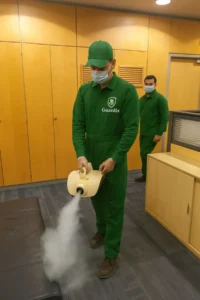
How Pests Get In During Summer
Understanding summer entry routes helps you block them:
| Entry Route | Why It Matters in Summer | Prevention |
| AC condensation lines | Constant water source attracts cockroaches, ants, rodents | Ensure proper drainage; no pooling |
| Gaps under doors | Cool air escaping signals shelter; pests follow the temperature gradient | Install door sweeps on all exterior doors |
| Utility penetrations | Pests follow pipes and cables to water sources | Seal gaps with appropriate materials |
| Floor drains | Sewer cockroaches and rodents enter through drains | Keep traps filled with water; use covers |
| Windows and vents | Open windows during cooler evening hours invite entry | Ensure screens are intact |
| Deliveries and packaging | Cardboard boxes harbor cockroaches and their egg cases | Inspect deliveries; break down boxes outside |
| Pet doors | Direct access for rodents and insects | Use sealed pet doors; do not leave food nearby |
The Summer Prevention Playbook
Indoor Defenses
Eliminate water sources (the single most effective summer action):
- Fix dripping taps and leaking pipes immediately
- Wipe up condensation around AC units and pipes
- Do not leave water standing in sinks overnight
- Empty and refresh pet water bowls daily; clean the surrounding floor
- Check under sinks and behind toilets for moisture
Tighten food security:
- Store all food in sealed containers — summer heat makes odors travel further and attract pests faster
- Clean up crumbs and spills immediately
- Take garbage out daily; summer heat accelerates odor and attraction
- Clean inside microwaves, toasters, and under appliances weekly
Reduce harborage:
- Declutter storage areas, especially cardboard boxes
- Keep firewood and stored materials away from walls
- Vacuum and mop regularly, including under furniture
Outdoor and Building Envelope Defenses
- Seal entry points: Walk your property perimeter and seal any gap larger than a few millimeters
- Manage irrigation: Avoid overwatering gardens; fix leaking outdoor taps; ensure proper drainage so water does not pool near foundations
- Trim vegetation: Keep plants and tree branches at least one meter from exterior walls
- Garbage management: Use sealed bins; keep bin areas clean; do not leave bags out overnight
- AC maintenance: Clean filters regularly; ensure condensation drains properly away from the building
The AC Factor: Special Attention
Because Kuwait runs air conditioning nearly year-round, your AC system deserves specific summer attention:
- Clean or replace filters monthly during peak season — dirty filters reduce efficiency and circulate dust
- Check drain pans and lines for standing water, which attracts pests and breeds mosquitoes
- Inspect ductwork — contaminated ducts redistribute dust, mold spores, and allergens throughout your home
- Schedule professional AC cleaning before peak summer to remove accumulated dust and biological growth
Summer Pest Control for Businesses
For restaurants, hotels, warehouses, and offices, summer pest pressure carries elevated stakes:
Restaurants and Food Service
- Compressed spoilage timelines: Food that might last hours in cooler weather spoils in minutes in summer heat, attracting flies and cockroaches
- Ministry of Health scrutiny: Inspections continue year-round; summer pest evidence is treated seriously
- Increased service frequency: Monthly service contracts often need to move to bi-weekly during peak season
- Waste management: More frequent collection and rigorous bin cleaning are essential
Hotels and Hospitality
- Guest sensitivity: A single pest sighting in summer generates immediate complaints and reviews
- High turnover: Constant guest movement increases introduction risk
- Outdoor areas: Pool decks, terraces, and landscaping require integrated pest management
Warehouses and Logistics
- Rodent pressure: Displaced outdoor rodent populations move into warehouses
- Loading docks: Open doors during summer create constant entry opportunities
- Stored goods: Heat-stressed packaging and organic materials attract pests

When to Call a Professional
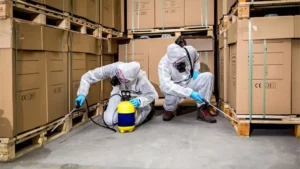
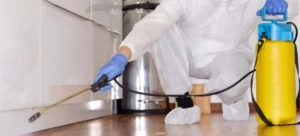
Some situations require immediate professional intervention rather than DIY attempts:
Contact Guardix immediately if you notice:
- Cockroaches visible during daylight hours (indicates severe population pressure)
- Winged termites indoors or piles of discarded wings
- Rodent droppings in multiple rooms, or scratching sounds in walls/ceilings
- Ant trails that persist despite cleaning and baiting
- Any pest activity in a food preparation or storage area
- Pest sightings reported by customers or staff (for businesses)
The summer urgency factor: Because pest populations grow exponentially faster in warm conditions, a problem that would take months to develop in cooler weather can escalate in weeks during summer. Early intervention is not just more effective — it is dramatically less expensive.
The Guardix Summer Pest Program
Guardix’s seasonal approach is built around the realities of Kuwait’s climate:
What Our Summer Service Includes
- Comprehensive inspection: Identification of active pests, harborages, entry points, and water sources specific to summer pressure patterns
- Targeted treatment: Professional-grade products selected for the species and conditions present, applied to harborage sites
- Water source management: Identification and elimination guidance for the condensation and moisture issues that drive summer invasions
- Perimeter defense: Exterior barrier treatment to intercept pests before they enter
- Follow-up scheduling: Closer follow-up intervals during peak season to match accelerated breeding cycles
- Prevention reporting: Specific, prioritized recommendations for your property
Why Seasonal Adjustment Matters
A pest control program calibrated for moderate conditions is underpowered for a Kuwaiti summer. Guardix adjusts:
- Product selection for heat-stable formulations
- Application frequency matched to accelerated breeding cycles
- Inspection focus toward water sources and AC-related entry points
- Treatment intensity based on measured pest pressure
Frequently Asked Questions
Is it true that cockroaches come out more in summer?
Yes. Warmth accelerates their breeding cycle dramatically, and their search for water intensifies as outdoor moisture disappears. Summer is peak season for cockroach activity and population growth in Kuwait.
Should I increase my pest control service frequency in summer?
For most Kuwait properties, yes — especially restaurants, ground-floor units, and properties near waste or construction areas. Guardix can assess your specific risk and recommend the right interval, often moving to bi-weekly service during peak months.
Does keeping my home colder reduce pest activity?
Cooler indoor temperatures do not reduce pest presence — pests are attracted to the shelter and water your building provides, not just the temperature. However, controlling humidity and eliminating condensation does reduce attraction significantly.
Are summer pest treatments safe when we are running AC constantly?
Yes. Guardix uses Ministry of Health-approved products applied according to strict protocols. Your technician will advise on any brief ventilation or re-entry considerations, but treatments are designed for occupied homes and businesses.
What is the single most effective thing I can do to prevent summer pests?
Eliminate standing water and fix condensation issues. In Kuwait’s summer, water is the primary attractant driving pests indoors — more than food. Fixing leaks, managing AC condensation, and removing water sources addresses the root cause of most summer invasions.
Do Not Share Your Summer With Pests
Summer in Kuwait is challenging enough without uninvited guests. The heat that drives you indoors drives pests indoors too — but with the right preparation and professional support, your home or business can stay comfortable, hygienic, and pest-free all season long.
The key is acting before populations establish. Summer pest problems compound quickly, and early intervention is always faster, cheaper, and more effective than remediation after an infestation takes hold.
Contact Guardix today for a summer pest assessment and a treatment program calibrated to Kuwait’s peak-season conditions.
Guardix — Your Trusted Partner in Public Health & Operational Hygiene. Serving Kuwait since 2012. Licensed by the Kuwait Ministry of Health.
Call now: [Contact Guardix] | Book online: [Schedule Inspection] | WhatsApp: [Message Us]