
Pest Control for Restaurants in Kuwait: Meeting Ministry of Health Standards

Your restaurant passed its last inspection. The kitchen looks clean. The staff know to keep food covered and surfaces wiped. But last Tuesday, a customer spotted something small and dark scurrying behind the counter. They photographed it. Posted it.
This scenario plays out regularly in Kuwait’s food service industry. And the consequences extend far beyond that single post.
A pest sighting in a restaurant is not just an operational problem — it is a public health issue with legal, financial, and reputational consequences that can permanently damage a food business. In Kuwait, where the Ministry of Health conducts unannounced inspections and where social media amplifies every incident, the margin for error in pest management is essentially zero.
This guide covers what Kuwait restaurant owners, food service managers, and commercial kitchen operators need to know about professional pest control — from understanding the legal framework to implementing an integrated pest management (IPM) program that meets Ministry of Health standards.
The Regulatory Framework: What Kuwait Law Requires
Ministry of Health Standards for Food Establishments
The Kuwait Ministry of Health enforces strict pest control requirements for all licensed food establishments under the Public Health Law and associated food safety regulations. Key requirements include:
- Zero tolerance for live pests in food preparation, storage, or service areas
- Pest control contracts with licensed providers are required for initial licensing and renewal
- Regular inspection documentation must be maintained on-site and available for inspector review
- Structural requirements: No cracks or gaps in walls, floors, or ceilings that could allow pest entry; properly sealed utility penetrations; functional door seals and window screens
- Chemical use compliance: Only Ministry of Health-approved pesticides applied by licensed technicians
- Staff hygiene training: Food handlers must receive training in pest identification and reporting procedures
What Happens During an Inspection
Ministry of Health inspectors can arrive unannounced at any licensed food establishment. During inspection, they will:
- Check for live pests: Any live cockroach, rodent, or fly in food areas is grounds for immediate citation
- Look for evidence of past activity: Fecal droppings, gnaw marks, rub marks along walls, shed skins, and nesting material
- Review pest control documentation: Your service contracts, treatment records, and technician visit logs must be current and on-site
- Inspect structural conditions: Gaps around pipes, broken door sweeps, damaged screens, and cracks in walls or floors
- Evaluate storage practices: Improperly stored food, cardboard boxes on the floor, and open waste containers are major violations
- Check chemical storage: Any pesticides stored in food areas or improperly labeled are serious violations
Consequences of Non-Compliance
| Violation Level | Consequences |
| Minor (documentation issues) | Written warning; 48-hour correction period |
| Moderate (evidence of past pest activity) | Conditional pass; follow-up inspection within 7 days |
| Serious (live pests in food area) | Immediate closure order; mandatory professional treatment before reopening |
| Critical (pest contamination of food) | Permanent suspension of license; potential criminal liability for illness-related incidents |
Why Restaurants in Kuwait Face Heightened Pest Pressure
The Environmental Factor
Kuwait’s climate creates conditions that make restaurant pest control uniquely challenging:
- Year-round pest activity: Unlike temperate climates where pest pressure decreases in winter, Kuwait’s warm temperatures keep pest populations active and reproducing 12 months a year
- Extreme summer temperatures: 50°C+ outdoor temperatures drive rodents, cockroaches, and insects to seek the cooler, food-rich environment of commercial kitchens
- Dense commercial neighborhoods: Restaurant clusters in areas like Salmiya’s restaurant strip, Hawally’s food corridors, and Kuwait City’s downtown create pest reservoirs that pressure individual establishments continuously
- Delivery and supply chain entry: Food deliveries are among the most significant pest introduction vectors — infested cardboard boxes, wooden pallets, and produce crates bring cockroaches and their eggs directly into your kitchen
The Cockroach Problem
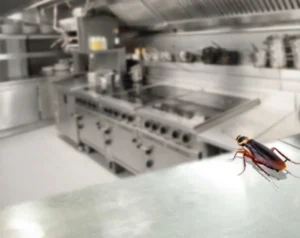
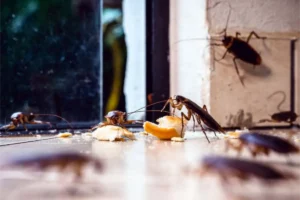
Cockroaches are the single most common and serious pest threat to Kuwait restaurants. Understanding why helps you control them effectively:
German cockroaches (Blattella germanica) are the primary concern:
- They live and breed entirely indoors — no outdoor reservoir
- A single female can produce 300-400 offspring in her lifetime
- They aggregate in warm, humid areas: under commercial refrigerators, inside electrical panels, behind cooking equipment, and inside the motor compartments of appliances
- They carry and spread Salmonella, E. coli, Campylobacter, and numerous other foodborne pathogens
- They develop resistance to insecticides rapidly when the same chemistry is used repeatedly
- Populations in a single restaurant kitchen can reach 10,000-30,000 individuals in an untreated infestation
American cockroaches (Periplaneta americana) enter from drainage systems:
- Sewer cockroaches travel through building drains and emerge from floor drains in kitchens and bathrooms
- They are larger and slower-moving than German cockroaches but are more likely to migrate between units through plumbing
- Drain management is essential for American cockroach control
The Rodent Risk
Rodents present the most severe food safety risk of any pest:
- A single rat can contaminate 10 times more food than it eats through urine, droppings, and fur
- Rodents gnaw through electrical wiring, creating fire hazards
- Norway rats and house mice in Kuwait are frequently resistant to first-generation anticoagulant baits
- Rodent entry typically occurs at night through delivery dock gaps, utility penetrations, and floor drain openings
Flies
Flies in Kuwait’s restaurant environment present a dual problem:
- House flies breed in garbage and organic waste; a single fly can carry 500+ species of bacteria from waste areas to food surfaces
- Fruit flies breed inside floor drains, in overripe produce, and in fermented residue inside equipment — standard sanitation does not eliminate their breeding sources without professional treatment


Integrated Pest Management for Kuwait Restaurants
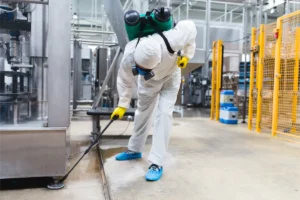
Reactive pest control — spraying when you see pests — is not sufficient for food service environments. Ministry of Health standards and practical effectiveness both require an Integrated Pest Management (IPM) approach.
What IPM Means for Restaurants
IPM combines four strategies:
- Exclusion: Denying pests physical entry and harborage
- Sanitation: Eliminating food, water, and shelter that sustain pest populations
- Monitoring: Detecting pest activity early before populations establish
- Chemical control: Targeted, precise pesticide application as a last resort when other measures prove insufficient
This approach minimizes chemical use — critical in food environments — while achieving better long-term results than chemical-only programs.
Phase 1: Exclusion
Structural gap sealing:
- All utility penetrations (plumbing, electrical, gas lines) sealed with pest-proof materials
- Door sweeps on all exterior and delivery doors, checked and replaced as needed
- Window and vent screens intact, repaired, and properly fitted
- Floor drains fitted with pest-proof covers; deep-set drain traps maintained with water at all times
- Walls, floors, and ceilings free from cracks that could provide cockroach harborage (gaps as small as 1.5mm can harbor German cockroaches)
Loading dock management:
- Deliveries inspected before bringing into the establishment
- Cardboard boxes broken down and removed immediately upon unpacking (cockroaches use corrugated cardboard for shelter)
- Pallets stored off the floor on metal racks; wooden pallets replaced with plastic where possible
Phase 2: Sanitation Standards
Sanitation is the foundation of restaurant pest control. Without it, no chemical program can succeed:
Daily sanitation requirements:
- All food prep surfaces cleaned and sanitized after each use
- Floors swept and mopped at close, with particular attention to under equipment
- Grease traps cleaned — accumulated grease is a primary cockroach food source
- Garbage removed to exterior containers before close; containers with tight-fitting lids
- Cardboard and packaging materials removed from kitchen immediately
- All spills and food debris cleaned up immediately
- Mop heads cleaned and dried; wet mops stored inverted
Weekly deep cleaning targets:
- Underneath and behind all fixed equipment (ranges, refrigerators, dishwashers, fryers)
- Inside equipment motor compartments and under refrigerator compressor units
- Floor drain interiors scrubbed; drain covers removed and cleaned
- Grease buildup on walls, hood systems, and backsplash areas addressed
- All dry storage organized — first in, first out; containers sealed; minimum 15cm off the floor
Monthly intensive cleaning:
- Refrigerator coils and motor compartments vacuumed
- Ductwork above cooking equipment inspected and cleaned
- Wall-mounted equipment removed and area behind cleaned
- Light fixtures cleaned — dead insects inside fixtures indicate pest pressure
Phase 3: Monitoring
Effective monitoring detects problems before they become infestations:
Sticky trap deployment:
- Glue boards placed in strategic locations: inside kitchen equipment, along cockroach transit routes, near floor drains, in storage areas
- Checked and replaced regularly by Guardix technicians; trap catch numbers tracked over time to identify developing pressure
- Rodent monitoring boxes positioned along exterior walls, behind equipment, and in storage areas
Staff reporting system:
- Every staff member trained to report any pest sighting immediately
- Designated log for pest sightings: date, time, location, pest observed
- No delay or concealment of pest sightings — early reporting enables early intervention
Guardix technician visits:
- Monthly minimum service visits for monitoring, treatment adjustment, and documentation
- High-activity seasons (summer, Eid periods) warrant increased frequency
- Detailed service reports provided after each visit for regulatory compliance files
Phase 4: Chemical Treatment
When monitoring indicates pest activity, targeted chemical treatment is applied:
Cockroach treatment protocol:
- Gel baits applied in small amounts at harborage points — inside equipment, along transit routes, in cracks and crevices — minimizing chemical exposure in food areas
- Insect growth regulators (IGRs) applied to interrupt breeding cycles; these are non-repellent and do not scatter populations
- Residual dusts applied inside wall voids, electrical panels, and equipment interiors
- Rotation of chemical classes to prevent resistance development
Rodent control protocol:
- Tamper-resistant bait stations positioned along exterior walls, at potential entry points, and in non-food storage areas
- First-generation and second-generation anticoagulant baits rotated based on resistance patterns
- Mechanical traps inside food preparation areas where chemical baits cannot be used
- Tracking powder to identify rodent movement patterns and entry points
Fly control protocol:
- Insect light traps (ILTs) positioned to intercept flies before reaching food areas; away from windows and doors to avoid attracting external insects
- Drain treatments to eliminate fruit fly breeding in organic residue
- Exterior perimeter treatments to reduce fly pressure from surrounding areas
Documentation Requirements for Ministry of Health Compliance
Maintaining proper documentation is not just good practice — it is a legal requirement:
Required Records
| Document | Content | Retention Period |
| Pest control contract | Provider name, license number, service scope, frequency | Duration of contract |
| Service visit reports | Date, technician name, areas treated, products used (with registration numbers), pest activity observed | Minimum 2 years |
| Pesticide application records | Chemical names, concentrations, application locations, quantities | Minimum 2 years |
| Monitoring data | Trap catch counts with dates and locations | Minimum 1 year |
| Staff pest training records | Training dates, topics covered, employee signatures | Duration of employment |
What Guardix Provides
All Guardix commercial service agreements include:
- Compliance documentation package: All required records maintained and organized for inspector review
- Service reports: Detailed reports after every visit with product registration numbers and application records
- Annual compliance summary: Year-end documentation summary suitable for license renewal submissions
- Emergency response documentation: Rapid service reports for unplanned visits required by inspection findings
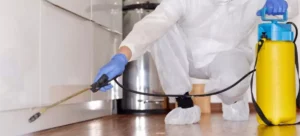
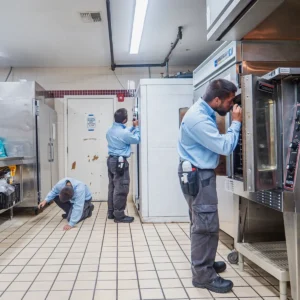

Service Programs for Kuwait Restaurants
Standard Monthly Program
Includes:
- Monthly technician visit (4-6 hours)
- Comprehensive inspection and monitoring review
- Cockroach gel bait application and refresh
- Rodent monitoring station check and rebait
- Fly light trap inspection and glue board change
- Service report for compliance files
- 24-hour emergency call-out included
Best for: Smaller restaurants, food trucks, café environments with moderate pest pressure.
Intensive Bi-Weekly Program
Includes all Standard Program elements, plus:
- Bi-weekly visits (essential during high-pressure seasons)
- Drain treatment for fly control
- Crack and crevice treatment with residual products
- Proofing recommendations report
Best for: High-volume restaurants, kitchens with persistent cockroach pressure, establishments near waste collection areas.
Multi-Site Management Program
For restaurant groups and food service chains:
- Centralized reporting and monitoring across all sites
- Standardized treatment protocols ensuring compliance uniformity
- Portfolio pricing with dedicated account manager
- Aggregated compliance documentation for multi-site license management
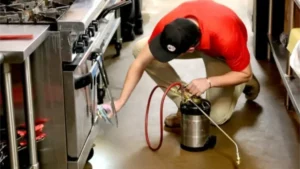
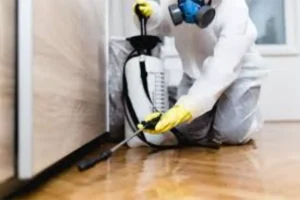
Costs and ROI for Restaurant Pest Control
Service Cost Overview
| Service Type | Monthly Cost Range | Annual Investment |
| Standard monthly program (small) | 50–80 KWD | 600–960 KWD |
| Intensive bi-weekly program | 100–160 KWD | 1,200–1,920 KWD |
| Emergency / reactive treatment | 80–200 KWD per visit | Variable |
| One-off fumigation (severe) | 200–500 KWD | — |
The Cost of Inaction
| Consequence | Estimated Cost |
| Ministry of Health closure (1 week) | 5,000–50,000+ KWD (lost revenue + legal/reopening costs) |
| Negative social media incident | Difficult to quantify; review recovery takes months |
| Foodborne illness liability | Potentially catastrophic; legal and reputational costs |
| License suspension | Business existential threat |
The math is straightforward: a professional pest control program at 600–1,920 KWD per year is insurance against closure costs that start at 5,000 KWD per incident.

Frequently Asked Questions
Can I operate during pest treatment?
For gel bait and monitoring services, yes — treatment is targeted to harborage areas away from food contact surfaces, and there is no required closure. For fumigation or spray treatments of larger areas, the kitchen should be closed and cleaned before food preparation resumes. Guardix schedules intensive treatments outside operating hours where possible.
How quickly can you respond to a pest emergency?
Guardix offers same-day emergency response for commercial clients with active service agreements. For new clients, we prioritize food service emergencies and typically respond within 24 hours.
What if inspectors arrive and we have evidence of pests despite treatment?
Contact Guardix immediately. We will document our treatment history, provide your compliance records to present to inspectors, and perform an emergency treatment if required. Our service records demonstrating active IPM management can be material in negotiating with the Ministry of Health versus a client with no documentation at all.
Are your products safe for food service environments?
Yes. All products used by Guardix in food service settings are specifically approved for use in food handling establishments by the Kuwait Ministry of Health. Application follows strict protocols to ensure food safety: baits are placed in inaccessible locations, spray treatments are applied only to non-food contact surfaces and only outside operating hours.
Why Choose Guardix for Restaurant Pest Control
Guardix specializes in the intersection of public health and pest management that food service environments demand:
- Ministry of Health licensed: Our service documentation is recognized by Kuwait’s food safety regulatory framework
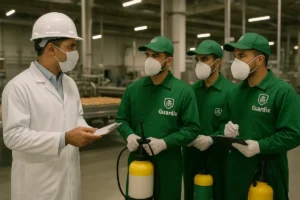
- Food service specialists: Technicians trained specifically in IPM for commercial kitchen environments
- Compliance-focused: We maintain your documentation portfolio so you are always inspection-ready
- Rapid response: Same-day emergency response for active service clients
- Rotating chemistry: Multiple chemical classes rotated to prevent resistance development in your establishment
- Staff training: We train your kitchen staff in pest identification and reporting — often a Ministry of Health requirement
- Arabic and English service: Service reports and communications available in both languages
Pest control is not a line item to minimize in your restaurant budget — it is foundational public health infrastructure. In Kuwait’s regulatory environment, the question is not whether you can afford professional pest control. It is whether you can afford to operate without it.
Contact Guardix today to discuss a restaurant pest control program that keeps you compliant, protects your reputation, and ensures your kitchen stays pest-free year-round.
Guardix — Your Trusted Partner in Public Health & Operational Hygiene. Serving Kuwait since 2012. Licensed by the Kuwait Ministry of Health. Commercial Pest Control Services for Food Service, Hospitality, Healthcare, and Industrial Environments.